Power BI
Five DAX Patterns Every Power BI Analyst Should Know
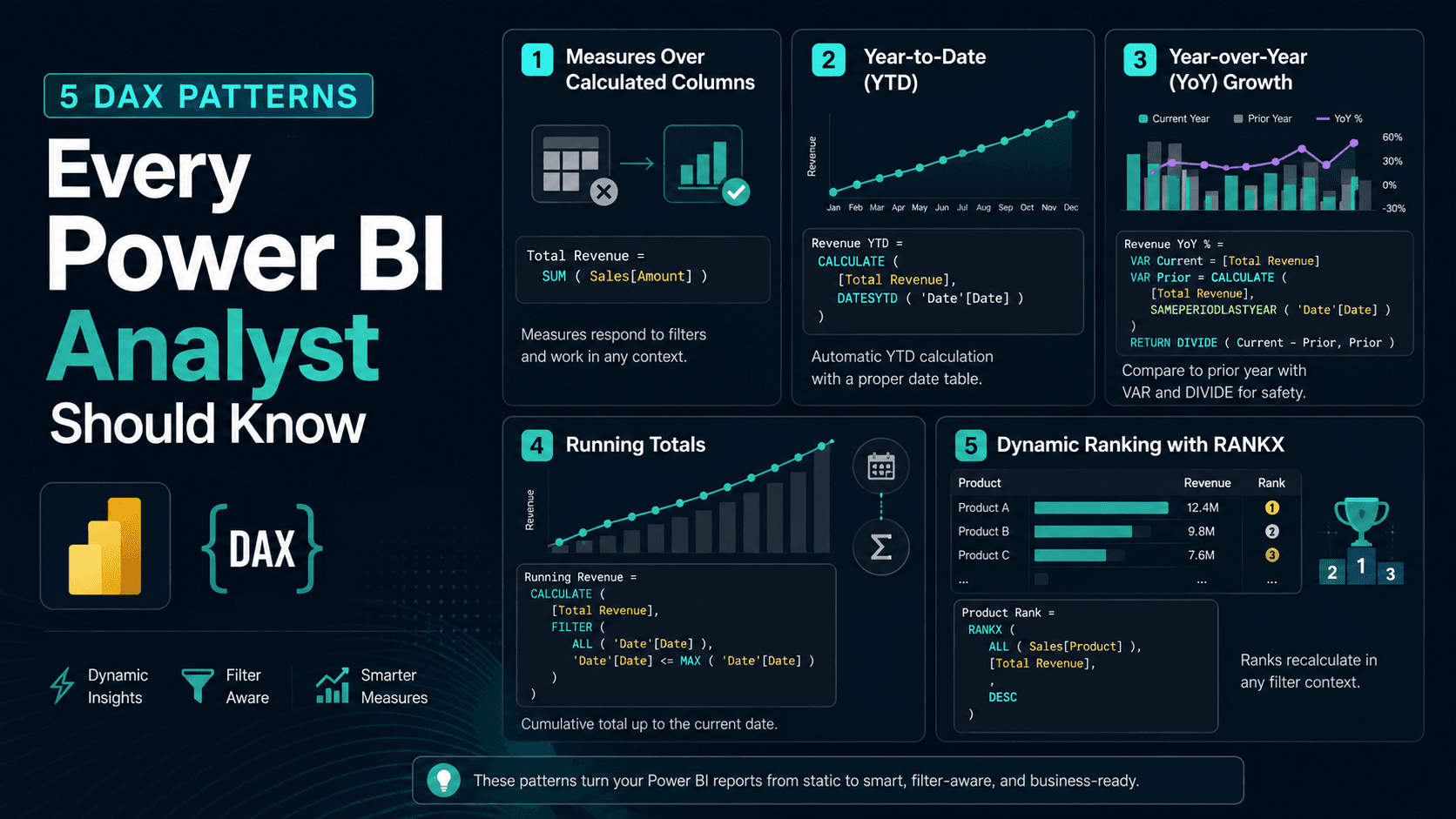
Five practical DAX patterns for Power BI: measures vs. calculated columns, year-to-date and year-over-year time intelligence, running totals, and dynamic ranking with RANKX.
3 min read
Tag
Five practical DAX patterns for Power BI: measures vs. calculated columns, year-to-date and year-over-year time intelligence, running totals, and dynamic ranking with RANKX.
The same formula written two ways behaves completely differently. Row context versus filter context, why averaging a margin column is wrong, the memory cost of stored columns, and a one-sentence rule for choosing correctly.
Column cardinality, not row count, drives Power BI model size. How VertiPaq compression works, why one wide table fights it, how to restructure into a star schema, and which columns to attack first using DAX Studio.